Keeping Pets Safe on the 4th of July: Fireworks, Anxiety, and Emergency Prep
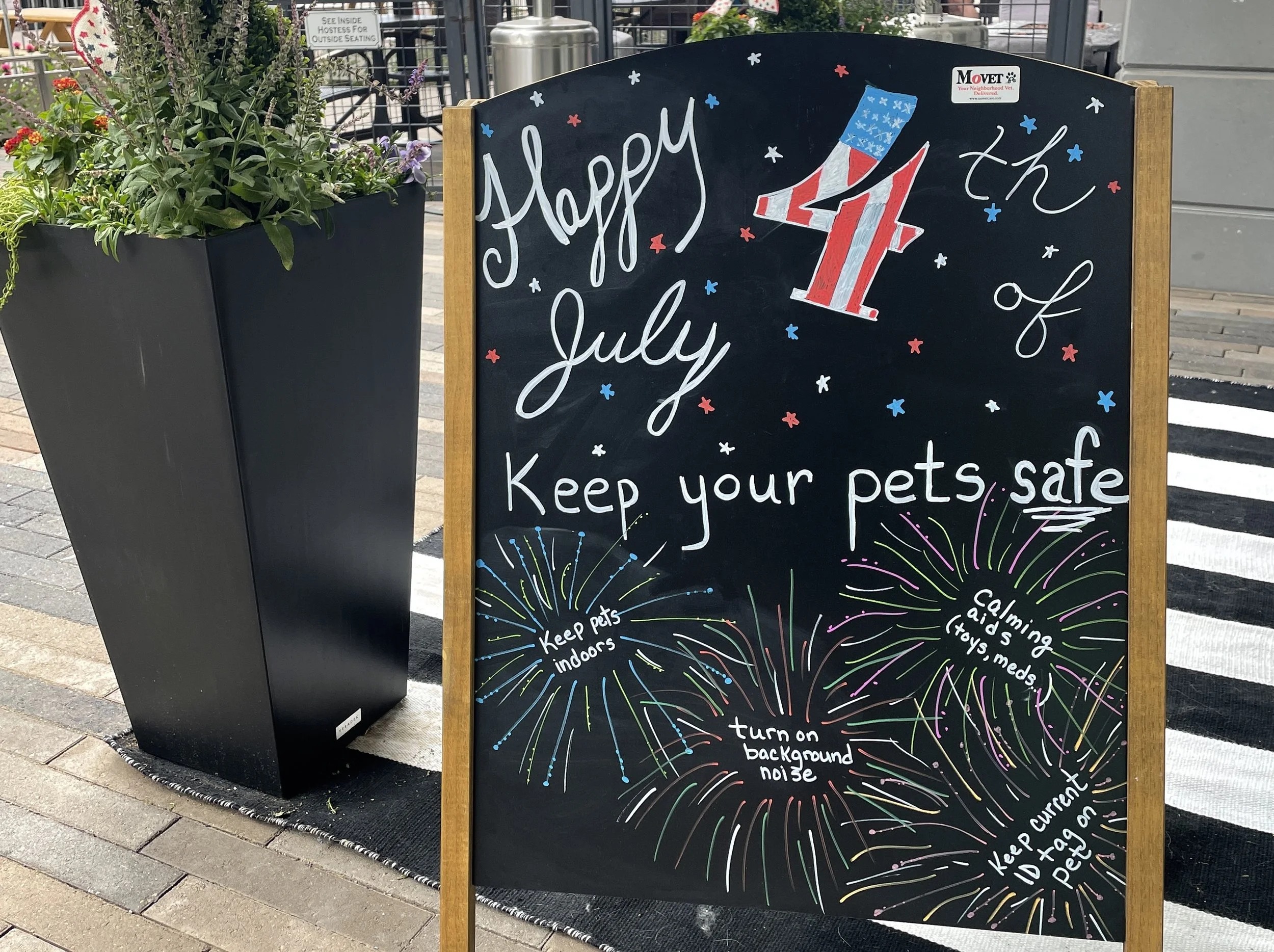
The 4th of July is one of those holidays that brings everything at once—barbecues, friends, family, fireworks, and a lot of excitement. But for our pets, it can feel very different.
What we celebrate as fun and festive is often confusing, overwhelming, and even terrifying for dogs and cats. At MoVET, we see a predictable spike in anxiety, escapes, and emergency visits around this holiday every year—and most of them are preventable with a little planning.
Download our “pre–4th of July checklist” here.
Why the 4th of July Is So Stressful for Pets
Fireworks are the biggest culprit. They’re loud, unpredictable, and often come with sudden flashes of light and ground vibrations that pets can’t understand or escape from easily.
Common reactions include:
Panting or pacing
Hiding or trying to escape
Shaking or trembling
Vocalizing or whining
Refusing food
Accidents in the house
Destructive behavior or escape attempts
Even pets who are typically confident can become anxious when exposed to repeated loud noise.
Escape Risk: The Most Overlooked Danger
The 4th of July is also one of the highest-risk days of the year for lost pets.
Dogs may bolt through doors, dig under fences, or break free from leash restraints during fireworks. Cats may slip out unnoticed while hiding or fleeing noise.
Please double-check:
Collars and ID tags are secure and up to date
Microchip information is current
Gates, doors, and fences are fully secured
How to Help Your Pet Feel Safe
A little preparation can make a big difference:
Create a safe space
Set up a quiet, comfortable room indoors with:
White noise or calming music
Curtains closed to block flashes
Familiar bedding and toys
Stay home if possible
Your presence is one of the most calming things for your pet.
Exercise earlier in the day
A long walk or play session before evening can help reduce anxiety.
Avoid fireworks exposure
Even “watching from a distance” can still be overwhelming for sensitive pets.
Medication and Anxiety Support
For pets with known firework anxiety, talk to your veterinarian ahead of time. There are safe, effective options that can help take the edge off and make the experience much more tolerable.
If your pet has struggled in previous years, don’t wait until July 4th evening—by then it’s often too late to intervene effectively.
Human Food Hazards at Cookouts
Holiday gatherings also bring plenty of tempting food within reach. Be mindful of:
Fatty meats (can trigger pancreatitis)
Bones (splinter risk)
Alcohol (even small amounts are dangerous)
Chocolate and desserts
Onion- or garlic-containing foods
A “quick snack” from a guest plate can turn into an emergency visit.
If Your Pet Gets Out or Becomes Distressed
If your pet escapes, is severely panicked, or you suspect injury or toxin exposure:
Stay calm and search nearby immediately
Contact local shelters and veterinary hospitals
Seek emergency care if needed
You can find emergency veterinary clinics here:
👉 https://www.movetcare.com/emergency
A Note From MoVET
We want your holiday to be joyful—not stressful. A little preparation now can prevent a lot of panic later.
If your pet has a history of noise anxiety, now is the perfect time to schedule a visit so we can create a plan together before fireworks begin.
And if things don’t go as planned, we’re here to help guide you through it.
Because while the 4th of July is about celebration, for us, it’s also about making sure every pet gets through it safely—tail wags included.